
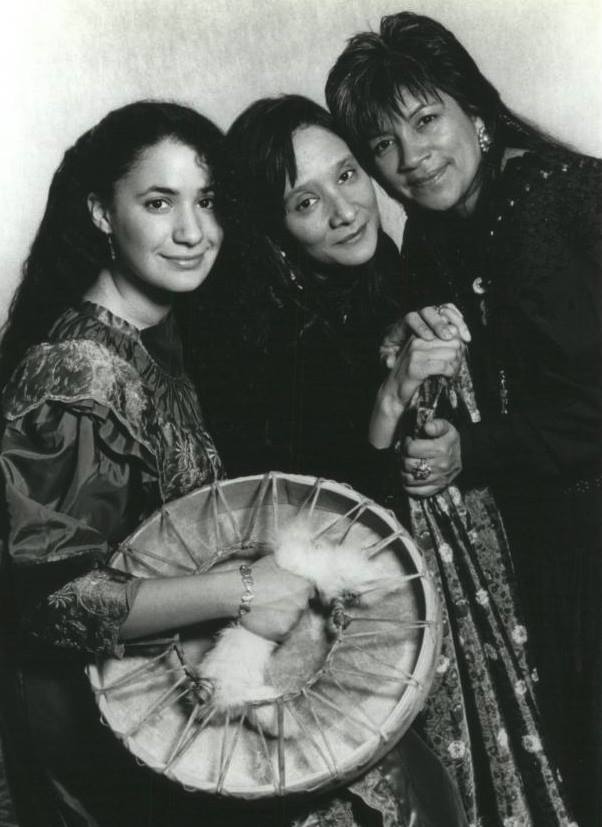
Bringing together three diverse artists, Ulali has claimed a unique space in contemporary American music. Often described as a Native American musical group, Ulali's work also bears strong elements of bluegrass, jazz, soul, and folk. Demonstrating its versatility, the group has worked with Robbie Robertson, the Indigo Girls, and Rita Coolidge, in addition to providing vocals for the soundtrack to the television documentary, The Native Americans, and tracks to the movie, Smoke Signals. Its live shows include appearances at the revived Woodstock Music Festival in 1994, the Atlanta Summer Olympic Games in 1996, and the Salt Lake City Winter Olympic Games in 2002. In between, Ulali has made numerous international appearances and has crossed North America doing shows at Native American cultural centers, commercial theaters, and college campuses. Through it all, pride in Native American traditions and their impact on American culture has been a recurring theme. As founder Pura Fé explained on Heartbeat: Voices of First Nations Women when introducing her song, Going Home: "Back a long time ago, back in those days when the settlers came in, they lived among the [Native American] peoples. They brought other peoples back. We worked together in the fields. Some of us left. Some of us ran and hid in swamplands and the hills. Many peoples were amongst us. We weren't only one kind. We sang when we worked together. And that's the birth of the blues."

Music was a dominant influence on Pura Fé's family, which had ties to legendary jazz musician Thelonius Monk. "Singing's our family tradition," she told the Toronto Sun. "We have several generations of singers on my mom's side. Each generation sang different styles of music. My grandma sang a lot of gospel and blues, but she also sang a lot of rattle songs. And my mom and her sisters sang opera." Despite the family tradition, Pura Fé did not initially pursue a career in music; instead, she studied dance and choreography at the American Ballet Theater and with the Martha Graham Dance Troupe. She later won numerous prizes in Native American dance competitions held by the Mohawk, Tuscarora, and Mashantucket Pequot tribes.
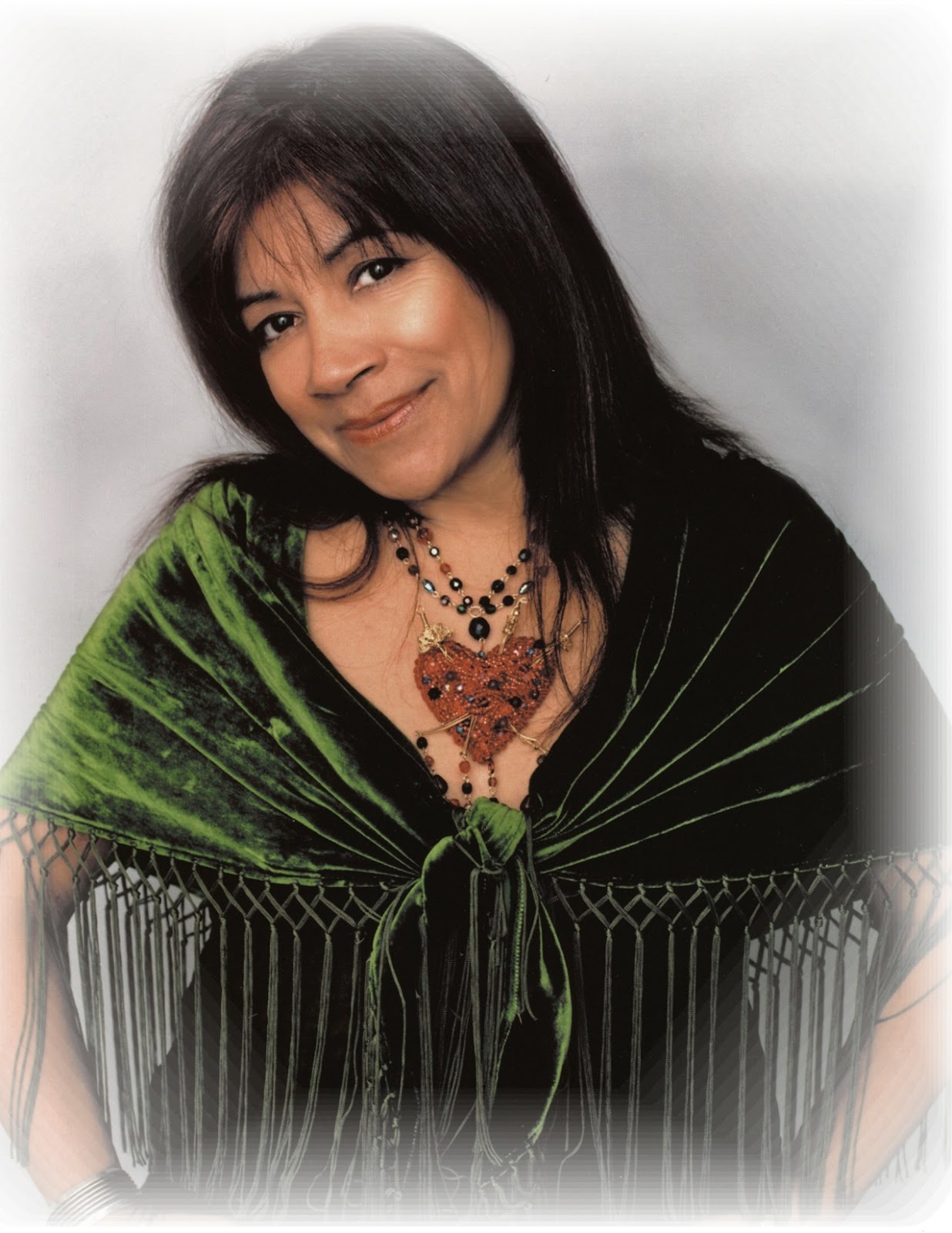 After appearing as a singer with the Mercer Ellington Orchestra, Pura Fé brought together a group of Native American women to perform traditional and original compositions of Native music with contemporary influences. One member of the new group, Soni Moreno, would follow Pura Fé into Ulali in 1987. Moreno—with roots in the Aztec, Maya, and Yaqui nations—came from a theater background. After training at the American Conservatory Theater in San Francisco in the 1970s, Moreno appeared in the musical Hair, and also made stage appearances on Broadway and throughout Europe while taking up a side career as a singer of commercials and with various country-and-western groups.
 When Pura Fé and Moreno decided to form Ulali, they recruited Pura Fé's cousin, Jennifer Elizabeth Kreisberg, as its third member. Like Pura Fé, Kreisberg traced her ancestry to the Tuscarora nation. At the time she joined Ulali, she was studying music at a Connecticut women's college and performing with the Full Circle Drum Society of Quinnentucket. The group chose the name Ulali from the Tutelo word that referred to the wood thrush, a song bird; the name was also bestowed on a woman with a beautiful voice in the Tuscarora culture. The group presents itself as a "First Nations" rather than Native American group. As members explain on their website: "We do not call ourselves 'Native American' because our blood and people were here long before this land was called the Americas. We are older than America can ever be and do not know the borders. Our Brothers and Sisters run North to South and into and under the waters for miles and years back."
The formation of Ulali marked an upswing in interest in indigenous folk music in the Americas. The group appeared on the soundtrack for the Turner Network Television's The Native Americans, in 1994, joining Robbie Robertson, a former member of the Band and a Mohawk descendant himself. The popular series and Robertson's soundtrack marked a turning point for the genre. As Native American Music Association president, Eileen Bello, told the Orange County Register, "No one knew about [Robertson's] Indian heritage until that recording. He was pivotal in launching the movement. While a lot of artists were doing the same kind of work at the same time, Robertson had more mainstream success." Indeed, between 1994 and 2000, the number of Native American releases grew by almost three times its previous level, and in 2001 a new category made its Grammy Awards debut: Best Native American Music Album.
 |
In 1995 and 1996 Ulali contributed tracks to two collections of Native American music; in 1997 it released its own full-length album, Mahk Jchi, on Thrush Records. The album is a hard-to-categorize mix of traditional Indian styles and contemporary influences from the fields of jazz, blues, bluegrass, soul, and country and western. The group heightened its popular-culture profile when it appeared on the soundtrack for the critically acclaimed 1998 comedy film Smoke Signals. Capping off a productive period, Ulali's vocals featured prominently on the Indigo Girls' 1997 album Shaming the Sun, and provided background vocals for 1997's Lessons from the Animal People, an album recorded by Lakota and Kiowa Apache story teller Dovie Thomason.
Ulali's genre-mixing goes beyond blending contemporary and traditional musical styles. Building on its members' diverse ancestral ties, the group invokes Native American forms from tribes throughout the Americas. Some songs feature dance rhythms from the Cherokee and Tuscarora of the southeastern United States, while others draw on vocal patterns of the Plains tribes from the north-central part of the country. Still others invoke African and Spanish influences. Pura Fé believes it especially important to stress the musical continuities in different musical forms. "If you listen to extremely early blues and gospel recordings, you'll hear Indian music," she told the Toronto Sun. "We've contributed a lot to those genres." She added, "If you look at the background of people who call themselves African Americans, you'll find they have Indian roots. They carry a lot of Native history with them."
In addition to their performing duties, the three members of Ulali have remained active as educators. Kreisberg helped to found a Native American Scholarship Fund at Virginia's Lynchburg College. Moreno has been a longtime board member of New York City's American Indian Community House and assisted with the planning for the Smithsonian Institute's National Museum of the American Indian. Pura Fé has continued to work as an instructor at Toronto's Native Theatre School while doing workshops all around North America as a solo artist and with Ulali. The group was honored with the Eagle Spirit Award at the 25th Annual American Indian Film Festival in 2000, and its video, Follow Your Heart's Desire, won an award for Best Video at the event.

